-
WILL INSLEY
Architecture of the Mind
January 8 – March 14, 2026
-
My mind played with architecture; my hand worked with paint.
– Will Insley, 1984WESTWOOD GALLERY NYC presents Will Insley: The Definitions, a solo retrospective exhibition curated by James Cavello. The exhibition presents artworks from each of Insley’s major series over his fifty-year career, together with more than forty poems from Insley’s original 1972 typewritten manuscript. In addition, the curation includes Insley’s drafting table and typewriter, preserved from his 231 Bowery studio. By placing these previously unseen writings in dialogue with the visual works they inspired, the exhibition offers an unprecedented view into Insley’s expansive world-building practice.
Insley’s conceptual project continues to intrigue new generations with questions regarding the possibilities for human experience and the impossibilities that can be explored by the human mind. While other artists, including Robert Smithson, Michael Heizer, Nancy Holt, and Alice Aycock investigated similar lines of thought, Insley remains the first artist to explore the expansion of pure abstract architectural space to its limits. By doing so, Insley shared with us an extraordinary vision of our collective future.
◘
Westwood Gallery NYC is honored to represent the estate and archives of Will Insley, and to have presented the last solo exhibition during his lifetime.
-
-
Will Insley (1929–2011) dedicated his five-decade career to channeling his visions of a future civilization he called the“Opaque Civilization.” At its core was ONECITY, a monumental metropolis that first appeared to him in a series of lucid dreams and evolved into an expansive conceptual universe expressed through painting, sculpture, drawing, photography, and writing. For Insley, ONECITY became a lifelong investigation shaped by his surroundings, his philosophical interests, art historical movements, and his background in architectural theory.
Born in Indianapolis one week before the 1929 stock market crash, Insley grew up with a fascination for hidden structures and forbidden spaces. He recalled exploring an abandoned house near his childhood home, an early spark for his interest in the built environment. In 1944, during a time of worldwide upheaval, a fifteen-year-old Insley decided to entertain friends in the neighborhood by designing a small, staged puppet show production that was written about in a local paper. The moment represented a hint of the future artist who would create a fully imagined civilization.
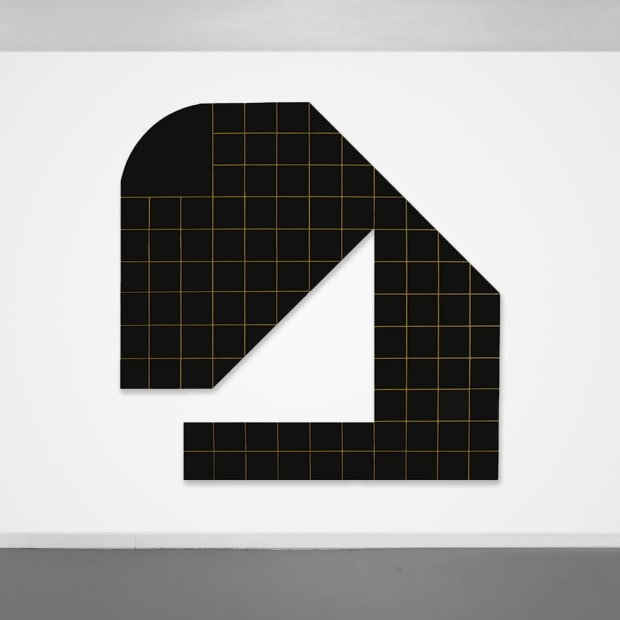
Insley studied architecture at Amherst College from 1947–51, writing his thesis on Mies van der Rohe who was known for his important theoretical proposals on the Universal Space Project. During this period, the Mead Art Museum hosted Insley’s first exhibition, Paintings Without Titles, which showcased figurative works and his early experimentation with unconventional materials such as masonite. While in Amherst, Insley continued to seek hidden spaces, entering a network of underground utility tunnels beneath campus. He continued his architectural studies at Harvard’s Graduate School of Design (1951–55), where he wrote a thesis proposing a design for the Guggenheim Museum. In Cambridge, he explored empty Victorian mansions, locked alleyways, and vertical fire-escape mazes, sites that informed his lifelong fascination with fragments of architecture. After army service from 1955–57, Insley moved to New York and from 1959–66 worked as a part-time file clerk at the Metropolitan Museum of Art sorting photographs and record cards of the collection. During this time, he began developing a theory regarding the "fragment" as visual synecdoche — the understanding that shards of a Greek vase could individually symbolize the entire object and even the civilization that created it. He soon established his first studio on 23rd Street, where he came to the realization that he needed to think as an architect in his approach to painting. He gradually abandoned figurative painting in favor of abstraction rooted in architectural forms, leading him to his first Wall Fragment paintings in 1963. In New York, his inspiration deepened during nighttime walks through deserted areas of Manhattan and his intense exploration of the grid. Monolithic buildings and their concealed spaces fueled his imagination of future civilizations based on the logic of architectural theory and the freedom granted by existential uncertainty.
As the intricacies of ONECITY’s abstract architecture evolved within Insley’s mind, he expounded his theorization between 1959 and 1971 in an epic poem. The text became the conceptual engine for each new body of work, marking his shift away from functional architecture and the dominant Minimalist and Conceptual frameworks. In this poem, the imagined collapse of all existing cities precipitates the creation of a singular metropolis designed for “the nation’s entire population of some 400 million souls.” Insley’s paintings, photomontages, drawings, and writings each attempt, in different ways, to answer a central question: What could ONECITY be?
-
Drawings
-
Photomontage
-
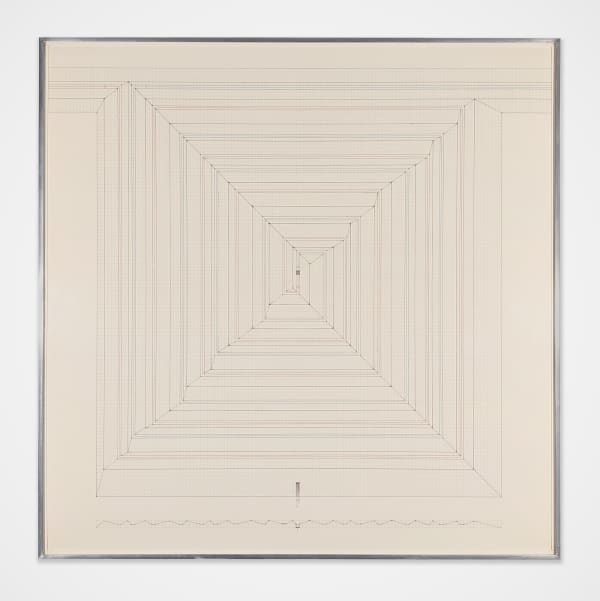
 Will Insley, /Buildings/ No. 19-20, Interior Building Corridor of Life Gate, View from the Ground, 1970-72$ 35,000.00
 -
Will Insley, /Buildings/ No. 19-20, Interior Building Corridor of Life Gate View from the Air, 1970-72$ 35,000.00
-
Will Insley, /Building/ No. 17, Passage Space Spiral, 1971$ 2,600.00
-
-
Wall Fragments
-
Will Insley: ARCHITECTURE OF THE MIND | installation view
Hinge Space Wall Fragment 93.12, 1993 [LEFT]
Wall Fragment No. 93.11, 1993 [right]
(NFS)
-
Will Insley, Wall Fragment No, 66.4, 1966-7
(NFS)




![Will Insley: ARCHITECTURE OF THE MIND | installation view Hinge Space Wall Fragment 93.12, 1993 [LEFT] Wall Fragment No. 93.11,...](https://artlogic-res.cloudinary.com/w_3000,c_limit,f_auto,fl_lossy,q_auto/ws-artlogicwebsite1652/usr/images/feature_panels/images_and_objects/613/installation-view-11_insley-architecture_web_cropped.jpg)