NO!art: Downtown Rebellion, 1960s: and Tribute Exhibition for NYC Gallerist Gertrude Stein (1927–2026)

“We made our rebellion and we were taking our chances."
— Boris Lurie, 1971
Westwood Gallery NYC presents two related exhibitions: NO!art: Downtown Rebellion, 1960s, focusing on the founders of the NO!art movement — Boris Lurie, Sam Goodman and Stanley Fisher — in conjunction with Tribute Exhibition: Gertrude Stein (1927-2026), NYC Gallerist, in honor of the New York gallerist who supported their work and other experimental artists.
More than fifty works are on view across two floors. The main gallery presents twenty-three paintings, mixed-media works, works on paper, and sculptures from the 1960s associated with the NO!art movement. A lower-level installation includes additional works, photographs, and archival material documenting exhibitions at Gallery: Gertrude Stein, along with personal items from Stein’s collection.
Tribute Exhibition page →
-
 Stanley Fisher, Untitled, circa 1961–63
 -
Stanley Fisher, Untitled, late 1960s
-
Stanley Fisher, Untitled (Help), circa 1961–64
-
Sam Goodman, Chess Set (Moment of Truth), 1961


-
Sam Goodman, Menu / Blood Wurst, 1961
-
Sam Goodman, Psyche & Vanity, 1961
-
Sam Goodman, Untitled, circa 1961–62
-
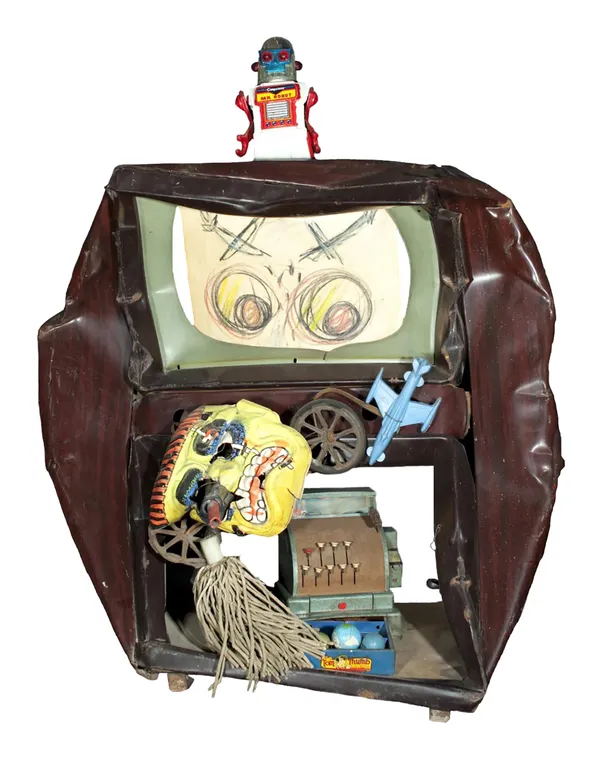
Sam Goodman, TV, 1962


-
Sam Goodman, The Box, 1959–64
-
Boris Lurie, Black Susan, 1962
-
Boris Lurie, Mirror, 1962
-
Boris Lurie, NO with Mrs. Kennedy, 1963


-
Boris Lurie, NO with Split Head, 1963
-
Boris Lurie, Altered Photos: Pinup (Dismembered figure), circa 1963
-
Boris Lurie, Untitled, circa 1963
-
Boris Lurie, Altered Photos (Cabot Lodge), 1963


-
NO!art: Downtown Rebellion, 1960s | Installation View
-
NO!art: Downtown Rebellion, 1960s | Installation View
-
NO!art: Downtown Rebellion, 1960s | Installation View
-
NO!art: Downtown Rebellion, 1960s | Installation View
-
NO!art: Downtown Rebellion, 1960s | Installation View
-
NO!art: Downtown Rebellion, 1960s | Installation View
-
NO!art: Downtown Rebellion, 1960s | Installation View
-
NO!art: Downtown Rebellion, 1960s | Installation View
-
NO!art: Downtown Rebellion, 1960s | Installation View
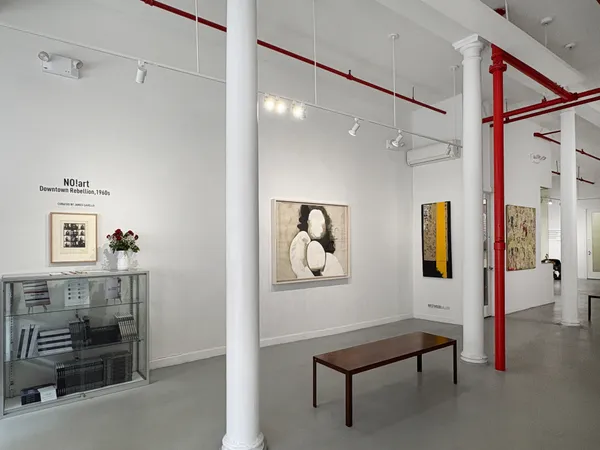

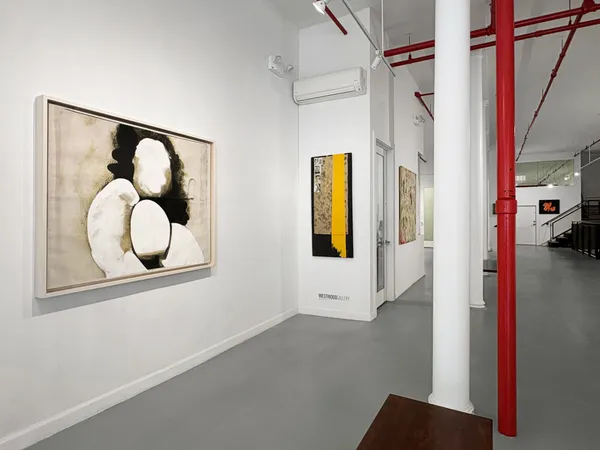


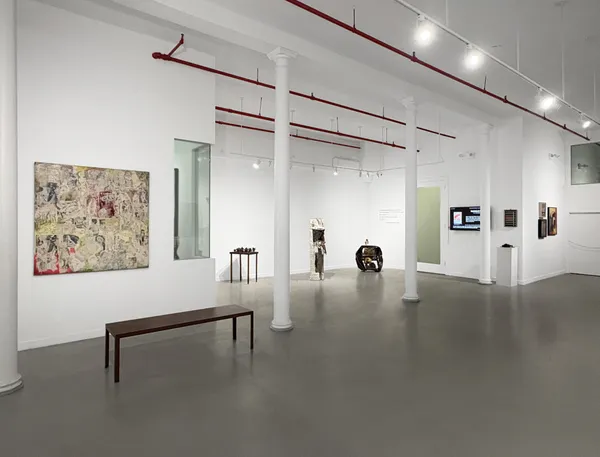

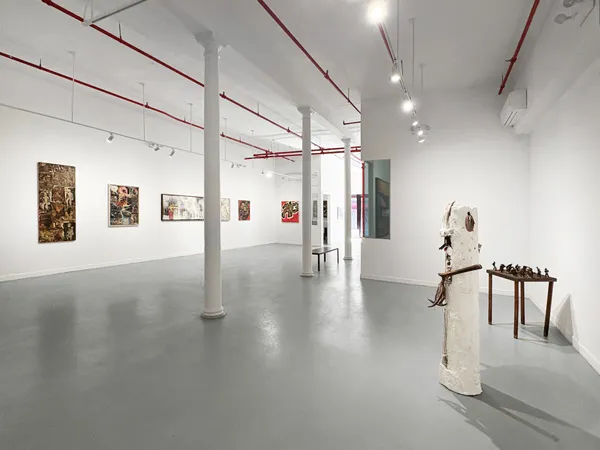

Westwood Gallery NYC presents two related exhibitions: NO!art: Downtown Rebellion, 1960s, focusing on the founders of the NO!art movement — Boris Lurie, Sam Goodman and Stanley Fisher — in conjunction with Tribute Exhibition: Gertrude Stein (1927-2026), NYC Gallerist, in honor of the New York gallerist who supported their work and other experimental artists.
The exhibitions are curated by James Cavello, who previously organized several exhibitions devoted to Lurie at the gallery. During the planning of Downtown Rebellion, gallerist Gertrude Stein passed away at the age of 98. Cavello subsequently incorporated a tribute exhibition examining her gallery’s role in presenting politically and socially engaged art during the 1960s and beyond.
More than fifty works are on view across two floors. The main gallery presents twenty-three paintings, mixed-media works, works on paper, and sculptures from the 1960s associated with the NO!art movement. A lower-level installation includes additional works, photographs, and archival material documenting exhibitions at Gallery: Gertrude Stein, along with personal items from Stein’s collection.
NO!art: Downtown Rebellion, 1960s
Emerging in the late 1950s in downtown Manhattan, NO!art developed as a reaction against what its founders saw as the increasing commodification of contemporary art. In contrast to the polished imagery of Pop Art and the formal emphasis of Abstract Expressionism, NO!art artists adopted a confrontational visual language addressing politics, consumer culture and historical trauma.
The movement grew out of artist-run cooperative galleries that began appearing in lower Manhattan during the late 1950s. Many of these spaces, located in former industrial lofts, were organized by artists seeking alternatives to commercial galleries.
One such venue was March Gallery, where co-founder Boris Lurie initiated exhibitions beginning in 1959. In 1960, together with Sam Goodman and Stanley Fisher, he organized a series of provocative exhibitions, Vulgar Show (1960), Involvement Show (1961) and Doom Show (1961), that would widen the gallery’s scope of resistance by shifting its focus from the structures of the art market to the broader contradictions of American society.
The artists publicly adopted the label “NO artists” in 1963 with NO!Show, presented at Gallery: Gertrude Stein on East 81st Street. The exhibition included Lurie’s collage NO with Candy (1962–63), juxtaposing a pin-up photograph with documentary images from Nazi concentration camps — a work that exemplified the group’s effort to confront the cultural amnesia they observed surrounding the legacy of war and genocide.
NO!art’s challenge to art-world insularity aligns it with a broader tradition of dissent. Its anti-commercial aesthetic and engagement with trauma echo Wolf Vostell’s work, while its confrontational tactics recall Marcel Duchamp. Its critique of formalism anticipates post-minimalist work by Robert Morris and Eva Hesse and the institutional critique of Hans Haacke. This critical lineage extends to contemporary activism, including the Guerrilla Girls and other artists addressing representation, equity, and institutional accountability.
In 1964, Stein’s gallery presented the controversial NO-Sculpture Show, or “Shit Show,” which consisted of twenty-one plaster sculptures resembling piles of excrement. An unambiguous condemnation of the commodification of art, the exhibition evoked strong reactions within the New York art world.
Gallery: Gertrude Stein
In the early 1960s, shortly after first meeting Boris Lurie, Gertrude Stein opened her eponymous gallery at 24 East 81st Street. Gallery: Gertrude Stein soon became a space for artists experimenting beyond mainstream trends. Not driven by commercial motivations like many of its contemporaries, Gallery: Gertrude Stein became known for presenting politically and socially engaged work.
Over the next five decades, Gallery: Gertrude Stein became a crucial platform for contemporary artists across genres. In addition to providing a platform for then-emerging artists like Dorothy Gillespie, Allan Kaprow, and many others, the gallery also exhibited the work of well-known artists such as Balthus, Hans Bellmer, Wolf Vostell, and Salvador Dalí. One of her most notable exhibitions occurred in 1963 when Stein presented Yayoi Kusama’s first installation show, Aggregation: One Thousand Boats Show, which helped launch the artist’s career in the United States and attracted the attention of artists such as Andy Warhol. Stein maintained relationships with many figures in the postwar New York art world, including gallerists such as Betty Parsons, Martha Jackson and Peggy Guggenheim, as well as critics including Clement Greenberg and Harold Rosenberg.
After Lurie’s death in 2008, Stein helped establish the Boris Lurie Art Foundation to preserve and promote the work of Lurie and other NO!art artists through exhibitions, publications and institutional collaborations. The current exhibition includes archival materials from Stein’s gallery, photographs of past installations and works related to the NO!art movement. Though largely excluded from major institutions early on, NO!art has since been reassessed through museum exhibitions and the work of the Boris Lurie Art Foundation. After the first exhibition in 2010 at Westwood Gallery NYC, a retrospective exhibition at the Museum of Jewish Heritage NYC helped illuminate Boris Lurie’s work, followed by the Janco-Dada Museum, the Museum Ludwig, the Jewish Museum Berlin and many others. The Grey Art Museum has placed NO!art within broader postwar contexts. Together these efforts have reframed NO!art as a vital dissenting force in twentieth-century art history.
About the Artists
Boris Lurie (1924–2008) was born in Leningrad and raised in Riga. As a Jewish teenager during World War II, he survived ghettos and Nazi concentration camps. After immigrating to New York in 1946, he developed an artistic practice addressing trauma, mass culture and the legacy of the Holocaust. Lurie was a founding figure of the NO!art movement.
Sam Goodman (1919–1967) was born in Toronto and later moved to New York, where he became active in downtown artistic circles. In 1959 he joined Lurie and Fisher in forming the group that would become associated with NO!art.
Stanley Fisher (1926–1980), a New York–born poet and artist, participated in early NO!art exhibitions and contributed collages reflecting the movement’s confrontational aesthetic.
About Gertrude Stein
Gertrude Stein was born in Brooklyn and studied at the City College of New York, the Art Students League of New York and the New School for Social Research. In the early 1960s she founded Gallery: Gertrude Stein on East 81st Street in Manhattan. The gallery later moved to Madison Avenue in the 1970s and to West 57th Street in the 1980s, where it operated until 2010. Throughout her career Stein focused on artists whose work challenged conventional expectations in the art world.

